A vulnerability list tells you what is wrong. It does not tell you what could disrupt a federal program first.
Government contractors may have hundreds of findings across endpoints, servers, applications, cloud services and internet-facing systems. Treating every vulnerability as equally urgent can overwhelm security teams while the weaknesses most likely to be exploited remain exposed.
On August 26, 2026, CISA published its Vulnerability Review, covering fiscal years 2024 and 2025. The publication examines underlying causes of insecure software and practical steps organizations can take to reduce vulnerability risk. For GovCon organizations, the challenge is not simply finding vulnerabilities. It is determining which weaknesses pose the greatest risk to systems that support federal programs, sensitive information and contract delivery.
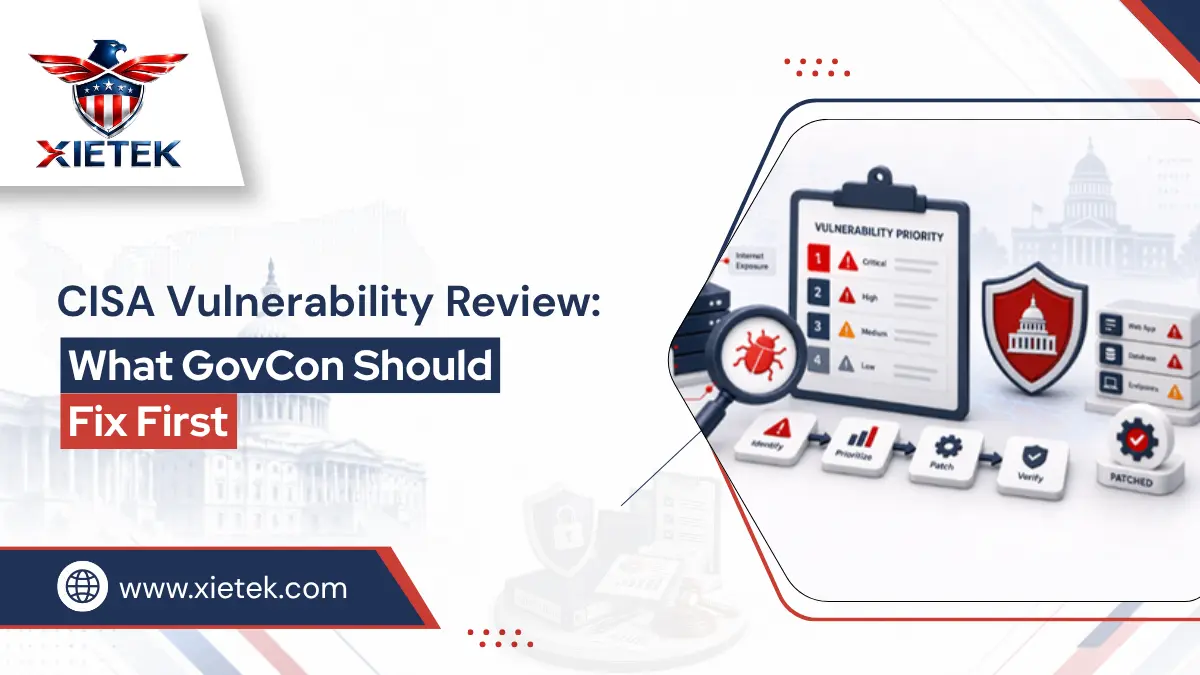
In this blog, we explain how GovCon security teams can prioritize vulnerabilities using exploitation evidence, internet exposure and system importance, then verify that remediation worked.
Start With Exploitation, Not Just Severity Scores
A high severity score matters, but severity alone does not show whether attackers are actively using a vulnerability. CISA maintains the Known Exploited Vulnerabilities Catalog as an authoritative source of vulnerabilities known to have been exploited in the wild and recommends using it as an input to vulnerability management prioritization. For contractors, a KEV finding should receive immediate attention. Teams should identify where the affected product exists, whether those systems are exposed and whether an approved remediation or mitigation is available.
The key point is that vulnerability severity and exploitation likelihood are different questions. A critical vulnerability may deserve attention because of its potential impact, while a known exploited vulnerability requires added urgency because attackers have already demonstrated that it can be used in real environments.
Add Internet Exposure to the Priority Decision
The next question is whether an attacker can realistically reach the affected system. Internet-facing applications, remote access services, gateways and other externally accessible technologies provide a more direct path for exploitation than properly isolated systems. Vulnerability tickets should identify whether the asset is externally reachable, what service is exposed and whether access controls reduce that exposure. A useful rule is: known exploited plus internet-facing means immediate review.
If patching cannot happen quickly, teams should consider vendor approved mitigations such as restricting access, isolating the system or disabling the vulnerable service. Even temporary exposure reduction can provide valuable protection while teams prepare the permanent fix.
Consider What the System Means to Contract Delivery
Technical exposure is only part of the decision. Contractors also need to understand what happens if the affected system is compromised or taken offline.
A vulnerability affecting a low impact internal system may carry less immediate risk than one affecting contract delivery, remote administration, CUI related operations, identity services or another critical business process. Security teams should ask whether the system supports a federal contract, handles sensitive information, provides privileged access or could create a path to more important systems.
This business context helps security teams explain remediation priorities to program managers and executives. A finding becomes easier to prioritize when leaders understand not only its technical rating, but also what operational activity could be disrupted if exploitation occurs.
Use Three Factors to Decide What Gets Fixed First
A practical prioritization process can begin with three questions:
1. Is it known to be exploited?
Check CISA’s KEV Catalog and credible threat intelligence.
2. Is the affected system exposed?
Determine whether it is internet-facing, remotely accessible or reachable through another exposed service.
3. How important is the system?
Assess its role in program delivery, sensitive-data handling, identity, administration and continuity.
When all three are present, known exploitation, meaningful exposure and high operational importance, the finding should move to the front of the remediation queue. Teams can also use these factors to distinguish vulnerabilities that require immediate action from those that can follow the normal maintenance cycle. That makes the process easier to defend during internal reviews and helps limited security resources focus on the most consequential risks.
Assign a Remediation Owner, Not Just a Ticket
Prioritization only matters if someone owns the next action. Findings can easily move between security, infrastructure, application teams, vendors and subcontractors without clear accountability. For every high priority finding, document the affected asset, remediation owner, required action, target date, temporary mitigation and evidence needed for closure. This matters when vendors, cloud providers or subcontractors maintain part of the affected environment.
Ownership should also include escalation. If the assigned team cannot patch because of a vendor dependency, operational restriction or maintenance window, security leaders should know who can approve temporary controls or adjust the remediation timeline.
Do Not Treat Patch Installation as the Finish Line
Installing a patch is an action. Confirming that the vulnerability is no longer exploitable is the outcome. CISA’s Federal Government Cybersecurity Incident and Vulnerability Response Playbooks describe remediation as patching actively exploited vulnerabilities or, when necessary, limiting access, isolating systems or making configuration changes.
For contractors, closure evidence may include a successful rescan, verified software or firmware version, configuration evidence or confirmation that a vulnerable service is no longer exposed. A ticket should not be considered complete simply because a patch was scheduled or made available.Teams should also retain enough evidence to explain what changed and when. That documentation can support internal audits, customer discussions and future investigations if questions arise about the system’s exposure history.
Check Whether Exploitation May Have Already Happened
For higher-risk findings, remediation should answer two questions: Have we removed the weakness? and Did anyone exploit it before we removed it?
If a known exploited vulnerability was present on an internet-facing or critical system, teams should review available logs, endpoint telemetry, authentication activity and other relevant security data. The depth of review should reflect the vulnerability, exposure window and affected system. Patching alone may not be enough if an attacker already established access. Security teams may need to look for unusual logins, suspicious processes, new accounts, unexpected configuration changes or other evidence associated with the affected system.
The goal is not to turn every vulnerability into a full incident response exercise. It is to recognize when exposure and exploitation history justify additional investigation.
Use Mitigation When Immediate Patching Is Not Possible
Some systems cannot be patched immediately because an update is unavailable, testing is required or downtime could affect program delivery. In those cases, waiting should not mean leaving the risk unchanged. Depending on vendor guidance and the environment, teams may isolate the asset, restrict external access, disable the vulnerable function, adjust firewall rules or increase monitoring.
The remediation record should show what temporary control was applied, why permanent remediation was delayed and when the issue will be reassessed. Contractors should also ensure that temporary mitigations do not quietly become permanent without a documented decision.
Vulnerability Priority Checklist for Government Contractors
Use this checklist when deciding whether a vulnerability needs accelerated action:
- Known exploitation: Is it in CISA’s KEV Catalog or supported by credible exploitation evidence?
- Internet exposure: Is the affected system externally reachable?
- System importance: Does it support contract delivery, sensitive data, identity or another critical function?
- Attack path: Could exploitation lead to privileged accounts or more sensitive systems?
- Remediation owner: Is one person or team accountable for the fix?
- Temporary mitigation: Has exposure been reduced if immediate patching is not possible?
- Verification: Has remediation been confirmed through rescanning, version checks or configuration evidence?
- Compromise review: If exploitation was plausible, has the team checked for signs of prior access?
- Documentation: Can the organization show what was found, what action was taken and when the fix was verified?
A finding does not need every factor to become urgent. The checklist helps teams explain why one vulnerability deserves attention before another.
Bottom Line
CISA’s Vulnerability Review gives government contractors a timely reason to reconsider how they decide what gets fixed first. Strong vulnerability management combines exploitation evidence, exposure and system importance, then assigns clear owners and verifies that remediation worked.
The objective is not simply to close more findings. It is to address the weaknesses most likely to affect federal program delivery before attackers can use them.
Frequently Asked Questions
Start with vulnerabilities known to be actively exploited, then consider internet exposure and the importance of the affected system to contract delivery or sensitive operations.
Not automatically. Contractors should determine obligations from applicable contracts, agency requirements and system-specific requirements while using KEV as a useful prioritization input.
No. Severity is useful, but exploitation evidence, system exposure and operational importance provide additional context for remediation decisions.
Verification may include rescanning, confirming the installed version, validating configuration changes or showing that the vulnerable service is no longer accessible.
A deeper review is especially useful when a known exploited vulnerability was present on an exposed or critical system. Review relevant logs, endpoint telemetry and authentication activity based on the risk.
Prioritize Vulnerabilities Before They Become Incidents
XieTek LLC provides Cybersecurity Services that help organizations strengthen vulnerability management, security monitoring and incident-response readiness. Our team helps organizations identify higher risk weaknesses, coordinate remediation and maintain visibility across systems supporting critical operations.
Need a clearer process for deciding what to fix first? Contact XieTek LLC to explore cybersecurity support designed to strengthen vulnerability management and reduce operational risk.