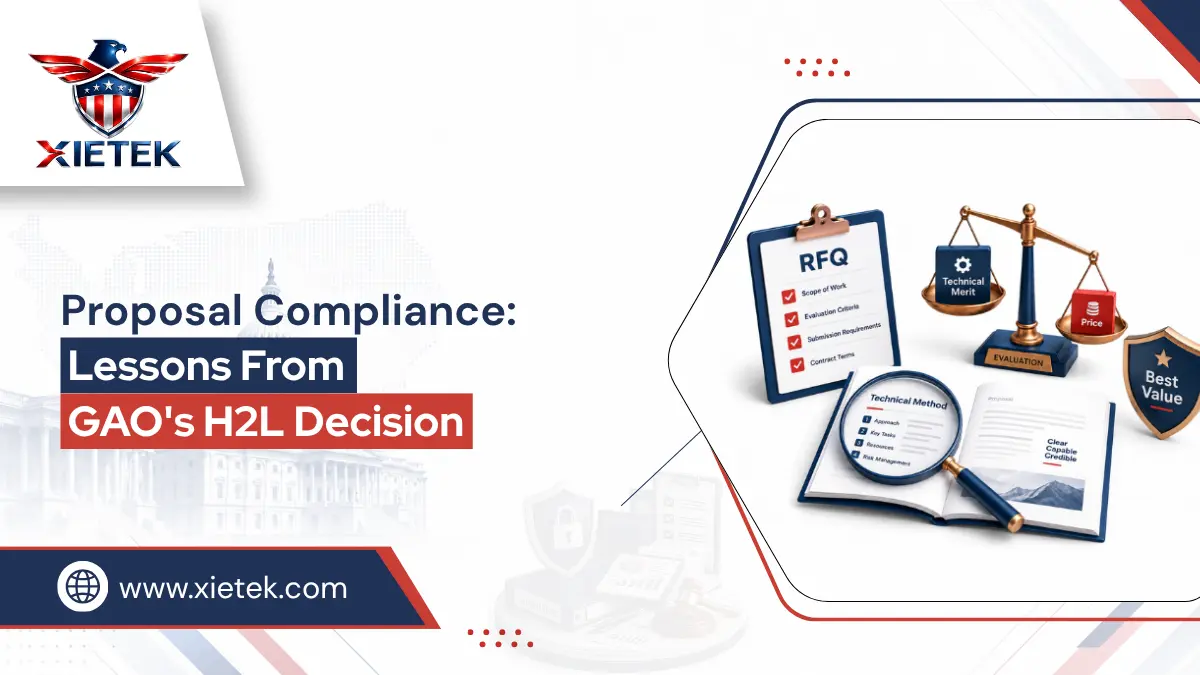
In GAO’s H2L decision, the lower priced quotation still lost. Two gaps in technical detail helped explain why.
The September 14, 2026 decision involved a Department of Veterans Affairs procurement for sanitization and disposal of sensitive media. The RFQ asked vendors for a detailed technical approach, not simply confirmation that they would follow the performance work statement.
H2L’s quotation was priced at about $3.92 million, compared with approximately $4.89 million for the selected vendor. The agency rated H2L’s technical approach Low Confidence, while the selected vendor received High Confidence. Importantly, the RFQ stated that the technical factor was more important than price. Among the disputed findings, H2L’s quotation did not clearly explain its method for destroying tape media or separately address the required loss-or-theft scenario. GAO denied the protest and upheld the agency’s evaluation. GAO’s H2L Solutions decision
For proposal teams, the case highlights an important distinction. Proposal compliance concerns whether a response meets applicable solicitation requirements. Technical confidence concerns whether the evaluator has enough information to understand and credit the proposed approach. Those concepts can overlap, but they are not the same.
The practical lesson is straightforward: when an agency asks how work will be performed, make the method visible.
What the H2L Decision Shows Proposal Teams
The price difference makes the evaluation context especially useful.
| Decision Point | H2L | Selected Vendor |
|---|---|---|
| Technical rating | Low Confidence | High Confidence |
| Approximate price | $3.92 million | $4.89 million |
| Award result | Not selected | Selected for best value |
Because technical merit carried more weight than price, a lower quotation did not automatically offer the best value. The agency still had to judge whether the proposed technical approach gave it sufficient confidence in successful performance.
That is the broader proposal lesson. A quotation can acknowledge a requirement yet still leave uncertainty about execution.
Follow Evaluation Criteria Into the PWS
Proposal teams often build a compliance matrix from proposal instructions and evaluation factors. That is the right starting point, but reviewers should continue following any references into the PWS, attachments and technical standards. In H2L, the technical evaluation connected to PWS requirements involving media sanitization and risk mitigation. A response could therefore appear complete under the evaluation heading while still missing detail inside the referenced work requirement.
FAR 8.405-2(d) requires the ordering activity to evaluate responses using the criteria provided to schedule contractors. It also directs the agency to place the order with the contractor representing the best value. For writers, that creates a useful review rule: Do not stop at the evaluation factor. Trace what the evaluator must judge back to every relevant performance requirement.
Replace Broad Compliance Statements With a Visible Method
A compliance statement confirms commitment. A strong technical narrative explains execution.
Consider this response:
We will comply with all PWS requirements for destruction of tape media.
The sentence shows intent, but the evaluator still cannot see the media-specific process.
A stronger proposal response could use a structure like this:
Illustrative template: For [specific tape-media type], the media technician will perform [specific destruction or sanitization method] using [named equipment or approved process] in accordance with [applicable PWS requirement, agency standard or technical standard]. The technician will record [required identifier, date, time or disposition data] in the [specified record or chain-of-custody log]. The operations lead will verify completion before [final disposition or required deliverable] is approved..
The placeholders are intentional. A real proposal should replace every one with solicitation-specific information.
This version teaches a more useful writing pattern:
Requirement → Method → Equipment or process → Standard → Owner → Evidence
The goal is not simply to write more. It is to remove uncertainty around how the requirement will be performed.
Address Named Scenarios Directly
The second disputed finding in H2L provides another practical lesson. The quotation discussed related risks, but the solicitation specifically required the risk approach to address loss or theft of media. Proposal teams should not assume that evaluators will connect a broad risk statement to every scenario named in the PWS.
If the solicitation names a specific event, such as loss, theft, outage, staffing failure or surge demand, respond to that scenario directly. A concise response should normally identify:
- the preventive control;
- the responsible role;
- the immediate response;
- the escalation or reporting action; and
- the recovery or corrective step.
Direct treatment reduces the amount of interpretation required from the evaluator.
Build a Requirement-to-Response Map Before Drafting
A traditional compliance matrix helps teams track where requirements appear. A technical response map goes one step further by defining what the response needs to show.
| Response Element | Illustrative Entry |
|---|---|
| Requirement | Destroy the specified tape media before final disposition |
| Method | [Insert media-specific destruction method] using [required or proposed equipment/process] |
| Responsible role | Media sanitization technician, with operations lead verification |
| Evidence | Chain-of-custody record, destruction record or required certificate |
| Risk response | If the primary process becomes unavailable, secure the media, notify the designated lead and execute the approved contingency process |
This is an illustrative proposal planning example, not the VA’s prescribed operating procedure in H2L. The value of the map is visibility. Before drafting begins, teams can identify a requirement with no method, an activity with no owner or a control with no proof of completion.
Run a “Show Me How” Review Before Submission
A compliance review should confirm that the quotation meets applicable solicitation requirements. A separate technical review should test whether the approach gives the evaluator enough information to understand how performance will occur.
Use these questions:
- Requirement: Can reviewers trace each evaluation criterion to the relevant PWS requirements?
- Method: Does the response explain how the work will actually be performed?
- Specificity: Where the requirement involves different media, systems, locations or scenarios, does the response distinguish between them?
- Role: Is responsibility clear for important tasks and decisions?
- Scenario: Does every specifically named risk or operating condition receive a direct response?
- Evidence: Does the proposal show how successful performance will be demonstrated?
- Risk response: Does it explain what happens if the normal method cannot be followed?
- Consistency: Do technical, staffing, management and pricing assumptions support the same approach?
- Evaluator confidence: Would the evaluator need to infer an important part of the solution?
That final question can expose gaps that a normal compliance check misses. If an internal reviewer has to guess how the solution works, an evaluator may face the same uncertainty.
Put Detail Where Evaluation Risk Is Highest
The H2L decision does not suggest that every technical response needs procedural detail. Proposal teams still have page limits and unnecessary explanation can bury stronger content. Use specificity where it can influence the evaluation. Give more attention to requirements tied directly to evaluation criteria, referenced PWS paragraphs, named scenarios, high risk activities and areas where the agency must judge whether the proposed method is workable.
This approach also improves SME reviews. Instead of asking someone to “add more detail,” the proposal manager can identify what is missing: the method, role, standard, evidence or contingency response.
Bottom Line
GAO’s H2L decision illustrates why proposal teams should review compliance and technical confidence separately. Meeting solicitation requirements remains essential. But when the evaluation asks for a detailed approach, the quotation also needs to make execution clear enough for evaluators to assess the solution.
Trace evaluation criteria into the PWS. Address named scenarios directly. Show the relevant method, owner and evidence. Then review the response from the evaluator’s perspective before submission.
Frequently Asked Questions
The decision shows that acknowledging a requirement may not provide enough information when an agency asks for a detailed technical approach. Proposal teams should explain the method clearly enough for evaluators to understand how the work will be performed.
No. Compliance concerns meeting applicable solicitation requirements. Technical confidence reflects how well the response demonstrates an understandable, workable approach under the stated evaluation criteria.
The level of detail should reflect the solicitation and evaluation criteria. Give particular attention to requirements tied to evaluation factors, named scenarios, high-risk activities and areas where evaluators must judge the proposed method.
An evaluation factor may reference more detailed requirements elsewhere in the solicitation. Following those references helps teams identify specific tasks, scenarios and performance expectations that the technical narrative must address.
Reviewers should check the requirement, method, responsible role, evidence, risk response and consistency with other proposal sections. They should also ask whether an evaluator would need to infer any important part of the solution.
Strengthen Technical Responses Before Submission
XieTek LLC provides Proposal Development Services designed to help government contractors turn complex solicitation requirements into clear, evaluator-ready responses. From compliance mapping and technical narrative development to structured proposal reviews, our team helps identify missing detail, strengthen delivery methods and connect proposal content to the requirements evaluators will assess.
Ready to strengthen your next technical response before submission? Contact XieTek LLC today to explore proposal development support for clearer, more compliant federal proposals.