A $10 billion DoD vehicle is opening its doors to more 8(a) small businesses. The bigger question is whether your proposal strategy is ready before the RFP arrives.
The Defense Health Agency Contracting Activity is preparing an on-ramp to the Department of Defense’s OMNIBUS IV multiple-award IDIQ contract vehicle. The anticipated RFP is intended for small businesses certified under the SBA 8(a) Program and could give new awardees access to future task order competitions. With the latest anticipated RFP timeframe moved to mid-August 2026, contractors have an opportunity to prepare before the formal solicitation arrives.
In this blog, we will break down what the OMNIBUS IV on-ramp means for prospective contractors and how they can use the pre-RFP period to strengthen proposal readiness, compliance and capture strategy.
OMNIBUS IV Is More Than a Single Contract Opportunity
The OMNIBUS IV on-ramp is designed to add new contractors to an existing DoD multiple-award IDIQ rather than create an entirely new contract vehicle. The existing vehicle was awarded in June 2022 and has a base ordering period through June 19, 2027, followed by an option period through June 19, 2032. The OMNIBUS IV solicitation attachment identifies a cumulative contract ceiling of $10 billion and states that more than $600 million had been awarded across 51 task orders. It also indicates that 33 of those task orders had gone to small businesses.
That history matters when evaluating the opportunity. Contractors should not view the on-ramp simply as a chance to win an IDIQ award. The strategic value is the potential access to future task order competitions once a company becomes a contract holder. For an eligible contractor, the proposal should therefore demonstrate not only the ability to win the initial award but also the capabilities that can support future task order pursuits.
Who Is Eligible for the OMNIBUS IV On-Ramp?
The anticipated solicitation is intended to be set aside for small businesses certified under the SBA 8(a) Program. The government anticipates making multiple new awards, with those awards aligning with the existing unrestricted OMNIBUS IV contract vehicle.
Contractors should confirm their current 8(a) status and understand how size and socioeconomic requirements apply before investing heavily in a response. Businesses should also review the final RFP carefully, as future amendments or regulatory updates may affect eligibility and task order considerations.
What Work Does OMNIBUS IV Cover?
The scope is broad, but the notice divides the vehicle into four major market segments: Research and Development, Research and Development Support Services, Regulatory Processes and Translational Science Support and Services.
The program areas include medical simulation technologies, infectious diseases, military health and performance, joint battlefield healthcare, radiation health effects, clinical investigations, genomics and omics-based research, emerging science and technology and other health-related research activities.
For contractors, this means the first proposal question should not simply be, “Can we perform this work?” It should be, “Where does our strongest, most relevant capability align with the government’s stated market segments and program areas?” That distinction can shape how a contractor positions its capabilities throughout the eventual government contract proposal.
Build the Compliance Strategy Before the RFP
One of the biggest advantages available to a contractor during a presolicitation period is time. Once the formal RFP arrives, the response team will have a defined proposal schedule, instructions, evaluation requirements, page limitations, submission requirements and deadline.
A strong government proposal writing process should therefore begin with a preliminary compliance framework. Contractors can map their capabilities against the anticipated scope, identify the strongest market segments, collect relevant past performance, identify technical and management capabilities and assess potential gaps. The framework will need to be updated when the RFP arrives, but early preparation can reduce the amount of time spent on administrative work once the solicitation is released.
Past Performance Should Support the Story
A contractor should avoid approaching past performance as a collection of company descriptions. The stronger approach is to identify examples that demonstrate the specific capabilities relevant to the government’s mission.
For OMNIBUS IV, that could mean organizing past performance around areas such as research and development, scientific and technical support, regulatory work, clinical or medical research support, technology transition, or other applicable services. The goal is to make it easy for evaluators to understand the relationship between what the company has already accomplished and what it is proposing to deliver.
This preparation can become especially valuable once the final RFP identifies the precise evaluation factors and instructions. Instead of searching for evidence under deadline pressure, proposal teams can refine material that has already been organized around the anticipated requirement.
Watch the Scope Overlap Between Market Segments
The four market segments should not necessarily be treated as isolated categories. The presolicitation information indicates that task order requirements may be solicited across applicable market segments and that there may be overlap between segments.
That has implications for proposal positioning. A contractor whose capabilities cross multiple segments should understand those connections before the RFP is released. For example, a company supporting research may also have capabilities in technical support, regulatory processes, or translational activities. Mapping those relationships can help the proposal team develop a clearer corporate capability story instead of presenting disconnected service descriptions. It can also help identify areas where teaming arrangements may strengthen the overall response.
The RFP Timeline Has Already Changed
The OMNIBUS IV timeline is itself an important lesson for contractors. The original presolicitation anticipated an earlier RFP release, but subsequent amendments extended the timeline. The latest amendment moved the anticipated posting timeframe to mid-August 2026 because additional time was needed to implement recent FAR Overhaul guidance.
For prospective offerors, the changing timeline should not be interpreted as a reason to delay preparation. The opposite is true. A shifting release date creates additional time to improve capture strategy, gather evidence, validate compliance assumptions, identify teaming partners and prepare proposal infrastructure. Contractors should continue monitoring the official SAM.gov opportunity rather than relying on older anticipated dates.
PIEE Will Matter When the RFP Is Released
The presolicitation materials also provide an important submission warning: the formal RFP and amendments are expected to be posted through the PIEE Solicitation Module and proposals are to be submitted through that module. The notice indicates that the public can view the solicitation posting, but proposal submission requires an individual account with the appropriate roles to submit on behalf of a contractor registered in SAM.gov.
Contractors should therefore review the PIEE Solicitation Module Vendor Access Instructions before the RFP is released. They can also use the PIEE Solicitation Module training to become familiar with the system and its solicitation and proposal functions. Getting the right people registered and familiar with the system early can prevent an administrative problem from becoming a proposal deadline problem.
Monitor SAM.gov and PIEE Together
The OMNIBUS IV notice makes monitoring particularly important because interested parties are responsible for monitoring SAM.gov and the PIEE Solicitation Module for the release of the solicitation and amendments. The notice also indicates that the PIEE module automatically posts a notice to SAM.gov when the solicitation or amendments are issued.
Contractors can use the PIEE public solicitation interface as another resource for tracking solicitation information. The practical lesson is to establish an internal monitoring process before the RFP release instead of depending on someone to discover an amendment after proposal development is already underway.
Use the Pre-RFP Period to Build a Proposal Framework
Once the formal RFP is released, the contractor will need to analyze the solicitation, create a compliance matrix, assign requirements, develop the proposal outline, establish win themes, collect evidence, write the response, conduct reviews and complete the final submission. Much of that infrastructure can be prepared now. Contractors can organize past performance, identify contributors, establish review responsibilities and create a preliminary compliance framework before the RFP arrives.
The same preparation can also help contractors identify where they need additional support. Capability gaps, limited proposal resources, or missing past performance evidence are easier to address before the solicitation deadline than during the final stages of a government RFP response.
What Contractors Should Do Before the RFP Drops
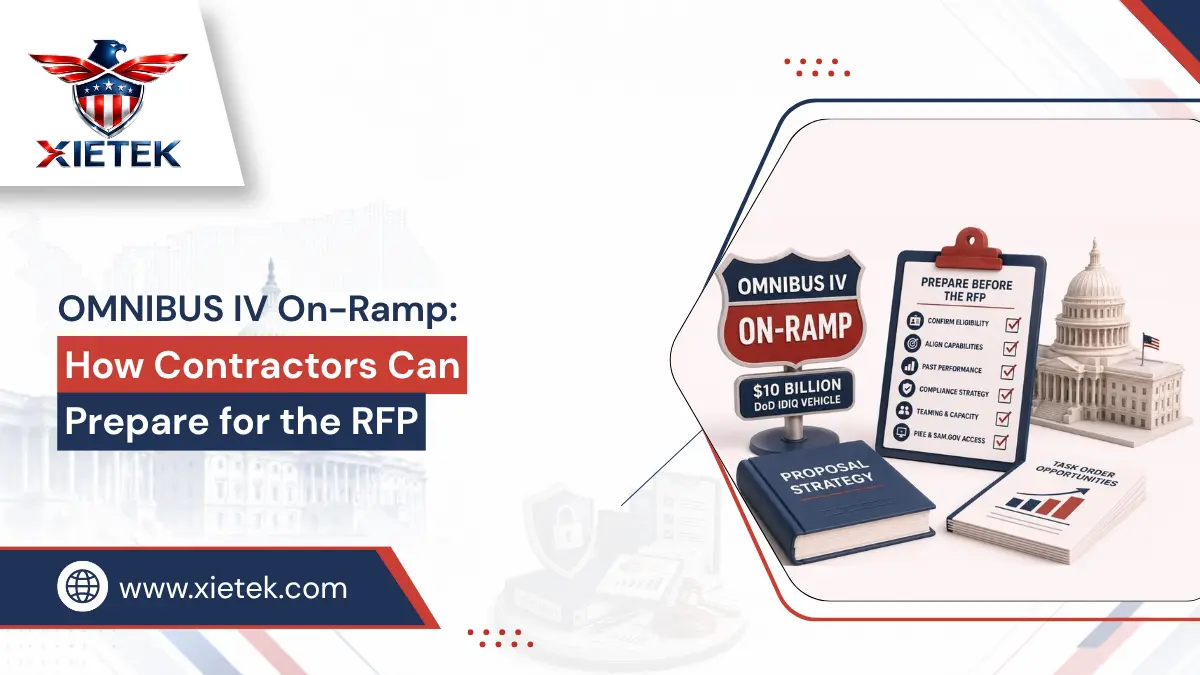
The strongest preparation strategy is to turn the presolicitation notice into a practical action list.
First, confirm eligibility. Determine whether the company meets the anticipated 8(a) requirements and identify where its capabilities fit within the four market segments.
Second, organize evidence. Identify relevant past performance and align it with the capabilities most closely connected to the opportunity.
Third, assess gaps. Determine whether teaming relationships could strengthen technical expertise, capacity, past performance, or other areas.
Finally, prepare the administrative side. Confirm SAM.gov registration, establish the appropriate PIEE access and make sure the person responsible for submission understands the platform. Contractors can also review the DoD Procurement Toolbox as part of their broader preparation process.
The objective is to reach RFP release day with the groundwork already done so the team can concentrate on the government’s actual requirements instead of starting the proposal process from zero.
What the OMNIBUS IV Opportunity Signals for Contractors
The OMNIBUS IV on-ramp demonstrates why presolicitation notices deserve more attention from government contractors. The notice already provides meaningful information about eligibility, scope, market segments, contract structure, task order potential, expected timing and the eventual submission environment, even though it is not itself a request for proposals.
For eligible 8(a) contractors, the opportunity is best approached as a preparation exercise before it becomes a proposal exercise. Contractors that use this period to align capabilities, validate eligibility, organize evidence, evaluate teaming needs and prepare for proposal submission will be in a stronger position once the RFP arrives.
Frequently Asked Questions
The OMNIBUS IV on-ramp is a planned DoD procurement intended to add new contractors to the existing OMNIBUS IV multiple-award IDIQ vehicle supporting military medical research and development services. The anticipated procurement is set aside for eligible 8(a) small businesses.
The existing OMNIBUS IV IDIQ has a cumulative ceiling of $10 billion. The presolicitation notice states that more than $600 million had been awarded across 51 task orders as of the latest amendment.
The anticipated on-ramp RFP is intended to be set aside for small businesses certified under the SBA 8(a) Program. Contractors should verify their eligibility against the final solicitation when released.
The vehicle covers four primary market segments: Research and Development, Research and Development Support Services, Regulatory Processes and Translational Science Support and Services.
The presolicitation notice states that the formal RFP and amendments will be posted through the PIEE Solicitation Module, with a corresponding notice posted to SAM.gov. Interested contractors are responsible for monitoring both systems.
The presolicitation notice states that proposals responding to the eventual RFP are to be submitted through the PIEE Solicitation Module. Submission requires an appropriate user account and roles on behalf of a contractor registered in SAM.gov.
The latest presolicitation amendment extended the anticipated posting timeframe to mid-August 2026, partly to allow additional time to implement recent FAR Overhaul guidance. Contractors should rely on the official SAM.gov and PIEE postings for the actual release date.
The Preparation Window Matters
OMNIBUS IV gives prospective contractors an important reminder: the proposal process can begin before the RFP is released. The presolicitation notice has already revealed enough about the opportunity for eligible contractors to assess fit, organize capabilities, prepare past performance evidence, evaluate teaming needs, establish proposal responsibilities and prepare for the eventual electronic submission process.
The formal RFP will determine the actual requirements, evaluation criteria, submission instructions and proposal deadline. Until then, contractors should treat the presolicitation as a planning document, not as a substitute for the final solicitation. Monitoring the official sources and converting the available information into a structured preparation plan can put a contractor in a much stronger position when the RFP finally arrives.
Prepare Your OMNIBUS IV Proposal Before the RFP Drops
XieTek LLC provides professional Government Proposal Writing Services designed to help federal contractors develop clear, compliant and competitive proposals.
From understanding solicitation requirements and developing win themes to proposal writing, compliance review and final quality assurance, our team supports you throughout the proposal development process.
Ready to strengthen your next federal proposal? Contact XieTek LLC today to get expert proposal support and take the next step toward your next federal contract opportunity.