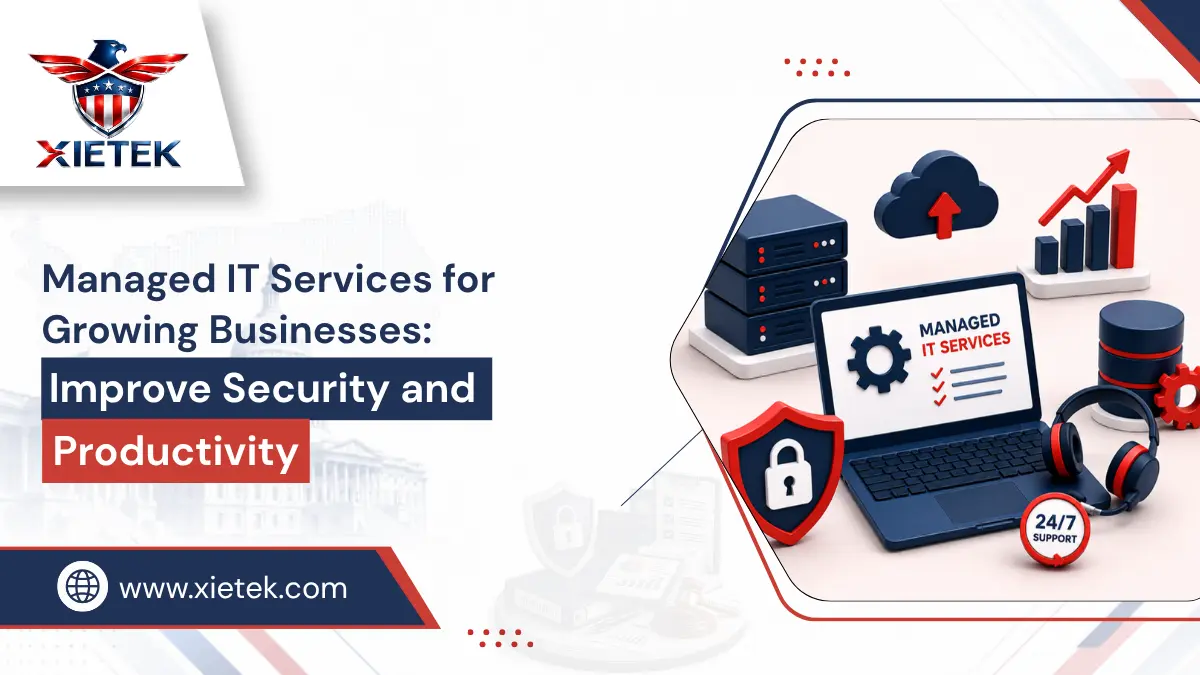
Growth changes the way a business depends on technology.
A growing organization has more employees to support, more applications to manage, more data to protect and more systems that need to stay available. What worked when the business was smaller can quickly become difficult to manage as technology becomes more central to daily operations.
When IT management cannot keep pace, problems start to surface. Employees lose time dealing with technology issues, security gaps become harder to identify, systems become more difficult to maintain and internal teams can become overwhelmed by routine IT responsibilities. Managed IT services provide a proactive way to address these challenges through ongoing monitoring, maintenance, support, security and infrastructure management.
Why IT Becomes More Difficult as a Business Grows
Business growth usually brings more technology with it.
There are more employees who need devices and access, more applications that need to work together, more data to manage and more cloud resources to oversee. Networks can become more complex, while security and compliance requirements may also increase as the organization takes on larger customers, enters regulated markets, or works with government programs.
Without a structured approach to IT management, these changes can create operational gaps. An employee may lose hours because of an unresolved technology issue, an outdated system may create unnecessary security risk, or a network problem may interrupt an entire department. A failed backup can also turn a manageable incident into a serious business disruption. This is why growing organizations need to move from reactive IT support toward proactive IT operations. Managed IT services help make that transition by placing day-to-day technology management, monitoring, maintenance and support under a defined operational framework.
What Managed IT Services Actually Include
Managed IT services are not simply a way to outsource a help desk. A strong managed services model looks at the wider technology environment and focuses on keeping systems secure, available, maintained and aligned with business requirements. Depending on the organization, services can include:
- 24/7 IT monitoring and alerting
- IT help desk and remote support
- Patch and vulnerability management
- Network management services
- Endpoint and desktop management
- Cloud and hybrid environment management
- Backup and disaster recovery planning
- Security monitoring and threat response
- Compliance and audit support
- IT reporting and performance reviews
- Technology maintenance and optimization
For businesses with limited internal resources, this creates access to professional IT services without requiring the organization to build a large technology operations team from scratch. For larger organizations and federal contractors, managed IT can also provide a structured way to support complex infrastructure, security requirements, compliance obligations and mission-critical operations.
1. Improve Security Through Proactive IT Management
Security becomes harder to manage when technology environments grow. More users, devices, applications, cloud resources and remote connections create more areas that need attention. Waiting for an employee to report a problem or for a security incident to occur is not a strong security strategy. Managed IT services take a proactive approach by combining continuous monitoring, regular patching, endpoint management, network monitoring and other protective measures. These practices can help identify unusual activity or system problems earlier while providing greater visibility across the organization’s technology environment.
Security should also remain connected to everyday IT operations. NIST guidance recognizes managed service providers and other third parties as options for organizations building their cybersecurity capabilities, particularly when they do not have the internal resources or expertise to manage every cybersecurity function themselves. This makes a managed services provider particularly useful for growing businesses that need stronger protection without creating an extensive internal security function.
2. Reduce Downtime and Keep Employees Productive
Technology problems have a direct effect on productivity. When an employee cannot access an application, connect to the network, use a device, or retrieve important files, work stops. When the same issue affects an entire department, the business impact becomes even greater. Managed IT support focuses on preventing and resolving these interruptions through proactive IT monitoring, remote support, regular maintenance and defined service levels for response and resolution.
The goal is simple: employees should be able to focus on their responsibilities instead of troubleshooting technology. Proactive monitoring can identify issues before they become major disruptions, while remote support can resolve many problems without waiting for an onsite technician. For a growing business, the hours recovered from fewer technology interruptions can contribute to better customer service, faster project delivery and more productive teams.
3. Scale Technology Without Constantly Expanding Internal IT Teams
Growth often creates a difficult staffing question: should a business continue adding internal IT employees every time its technology environment becomes more complex? For some organizations, expanding the internal team makes sense. For others, outsourced IT services provide a more flexible option. An experienced managed IT service provider can provide access to a broader range of skills across infrastructure, cloud operations, support, security, monitoring and compliance.
This allows businesses to scale their technology capabilities alongside their operational needs. Instead of hiring separately for every specialized requirement, an organization can use a managed services model to support multiple IT functions through one coordinated team. That can be particularly valuable for businesses that are growing quickly but want to keep their internal teams focused on core business priorities.
4. Strengthen Cloud and Hybrid IT Operations
Many growing businesses operate across a combination of cloud and traditional infrastructure. Applications may run in the cloud while certain systems remain onsite. Employees may work remotely while accessing business resources from different locations and data may be distributed across multiple platforms. Managing these environments requires visibility and consistency, which is where cloud managed services can provide value.
Cloud managed services can help organizations monitor cloud resources, manage configurations, maintain security controls and address performance issues. Hybrid IT management can bring the same operational discipline to environments that combine cloud and onsite infrastructure. XieTek supports cloud and hybrid environments, including AWS, Azure, Google Cloud and hybrid setups, with a focus on security, performance and continuous compliance monitoring. The objective is not simply to move everything to the cloud. It is to make sure the technology environment supports the way the business actually operates.
5. Support Compliance and Reduce Operational Risk
Compliance can become increasingly important as a company grows, especially when it works with regulated industries, government customers, or federal contracts. Keeping systems secure is only part of the challenge. Organizations may also need appropriate documentation, evidence, controls, reporting and processes. This is where managed IT solutions can provide value beyond technical support by helping organizations maintain documentation, monitor systems, manage vulnerabilities, support audits and identify gaps before they become larger problems.
For federal contractors and organizations supporting government programs, this operational discipline can be particularly important. XieTek’s managed IT approach includes compliance and audit support, controls mapping, evidence collection, documentation and processes designed to help enterprise and GovCon programs remain audit ready. A structured IT operations model can therefore help businesses manage both their technology environment and the operational requirements surrounding it.
6. Build Better Business Continuity
A technology problem does not have to become a business crisis. The difference often comes down to preparation. Backups, disaster recovery planning, system monitoring, incident response procedures and recovery processes give organizations a clearer path when something goes wrong. Business continuity is therefore not simply about recovering after a major outage. It is about preparing systems and processes so that disruptions have a smaller operational impact.
Managed IT services can bring these activities into the regular IT management cycle. Instead of treating backups and recovery planning as occasional tasks, organizations can make them part of ongoing technology operations. This is especially important for growing companies because the impact of downtime can become more significant as operations, customers, employees and technology dependencies increase.
7. Give Employees More Reliable IT Support
Employees do not need to understand the technical reason behind an IT problem. They need to get back to work. Reliable IT support services provide a clear path for resolving everyday issues involving devices, applications, networks, accounts and other technology. A managed IT support model can combine help desk services, remote assistance, desktop management, troubleshooting, system maintenance and user support to create a more consistent experience for employees.
Managed support can also provide leadership with better visibility into recurring technology problems. If the same application repeatedly creates issues, for example, the organization can investigate whether it needs better configuration, training, replacement, or integration. Over time, this turns IT support from a reactive function into a source of operational improvement.
Choosing the Right Managed IT Service Provider
Not every managed services provider delivers the same level of support. Businesses should evaluate a provider based on more than the number of services listed on a website. Consider whether the provider can:
- Monitor systems continuously
- Provide clearly defined service levels
- Support cloud and hybrid environments
- Manage patching and vulnerabilities
- Provide reliable user and desktop support
- Address cybersecurity requirements
- Support compliance and audits
- Assist with backup and disaster recovery
- Provide useful reporting
- Scale services as the organization grows
- Understand the business and regulatory environment
The provider should also take time to understand the organization’s current IT posture before recommending changes. XieTek follows a structured process beginning with discovery and assessment, followed by strategy and onboarding, implementation and ongoing optimization. This approach helps identify vulnerabilities, compliance gaps, operational priorities and opportunities for improvement before building the managed environment. That distinction matters because effective managed IT is not simply about handing over technology operations. It is about building a technology environment that supports business objectives.
A More Proactive Approach to Business Technology
The case for managed IT services becomes clearer as a business grows. Technology is no longer something that can simply be fixed when something breaks. It supports employees, customers, operations, data, security and business continuity every day. CISA cybersecurity guidance recommends measures such as multifactor authentication, stronger security practices and reducing the burden of maintaining vulnerable onsite systems where appropriate.
For growing organizations, the broader lesson is straightforward: technology management needs to become proactive. That means monitoring systems continuously, maintaining infrastructure, addressing vulnerabilities, supporting users, preparing for disruptions and regularly reviewing whether the IT environment still meets business requirements. Managed IT services provide a framework for doing exactly that while helping organizations keep their technology aligned with their operational goals.
Frequently Asked Questions
Managed IT services are ongoing technology management services provided by an external IT team. They can include monitoring, support, maintenance, cybersecurity, cloud operations, network management, patching, backups and compliance support.
Yes. Growing businesses often need more technology support and security expertise as their operations expand. Managed IT services can provide additional capabilities without requiring the business to build a large internal IT team.
Traditional IT support is often reactive, meaning a technician responds after an issue occurs. Managed IT support takes a more proactive approach by combining support with monitoring, maintenance, security, patching and ongoing system management.
Yes. Managed IT providers can support cloud, onsite and hybrid environments. Services may include cloud monitoring, administration, security, performance management, backups and ongoing optimization.
Yes. Managed IT can include security monitoring, vulnerability management, endpoint protection, patching, network security, incident response and other security functions. The exact services depend on the provider and the organization’s requirements.
Look for a provider with experience relevant to your industry and technology environment. Evaluate its monitoring capabilities, response processes, security expertise, compliance experience, service levels, reporting, scalability and approach to ongoing improvement.
Strengthen Your IT Infrastructure for Growth
XieTek LLC provides professional Managed IT Services designed to help growing businesses improve security, productivity, system reliability and day-to-day IT operations.
From proactive IT monitoring and managed IT support to cloud management, cybersecurity, network management, compliance support and business continuity, our team helps organizations maintain a secure and reliable technology environment.
Ready to strengthen your IT infrastructure? Contact XieTek LLC today to discuss your managed IT needs and build a more secure, reliable and scalable technology environment.