Cleared recruiting is becoming increasingly connected to the systems and processes that govern personnel vetting. For federal contractors, finding someone with the right technical skills is only part of the staffing challenge. Clearance requirements, vetting processes, onboarding dependencies and workforce planning can all affect how quickly a qualified professional becomes available.
Defense Counterintelligence and Security Agency (DCSA)’s 2026 Virtual Security Conference highlighted this changing environment, with sessions covering Trusted Workforce 2.0, personnel vetting modernization, adjudications, continuous vetting and the National Background Investigation Services (NBIS). The agenda also included updates on how these initiatives are affecting industry.
For contractors, the key issue is not whether recruiting teams need to manage DCSA systems themselves. It is how changes in the personnel vetting environment could affect cleared talent pipelines, hiring coordination and workforce planning.
Why Workforce Modernization Matters to Cleared Recruiting
Cleared recruiting has never been simply a sourcing exercise. A candidate may have the right technical background but still face conditions that affect when they can begin performing on a contract.
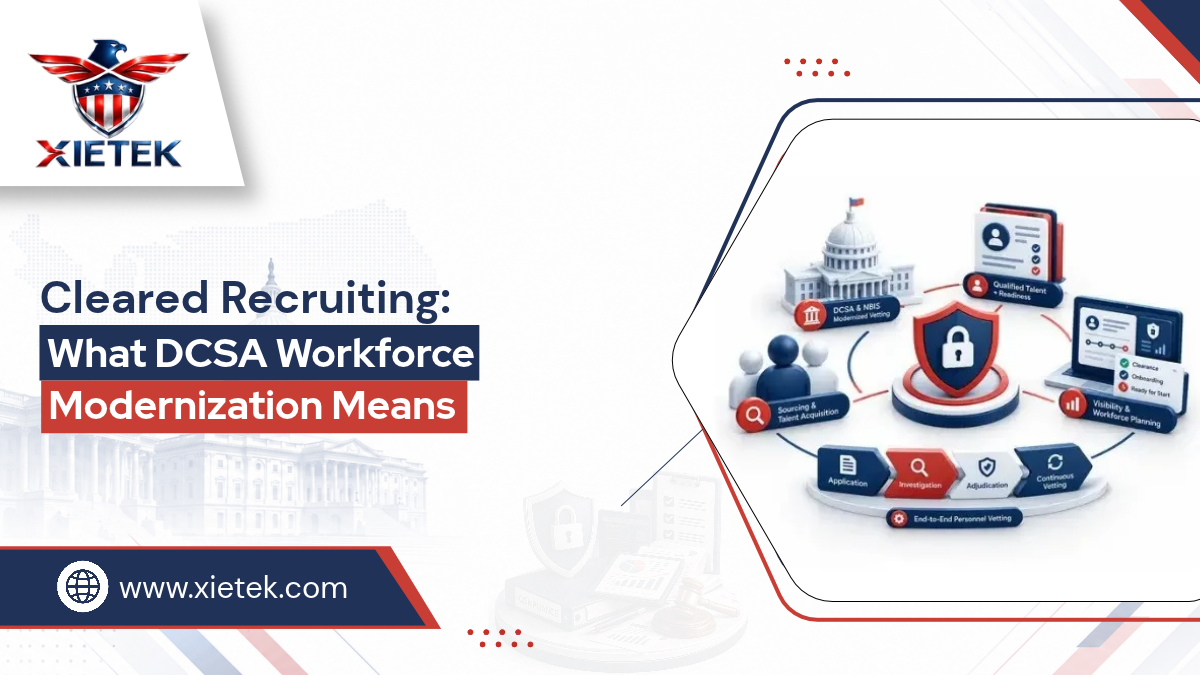
DCSA describes NBIS as the federal government’s IT system for the end-to-end personnel vetting process, covering initiation and application through investigation, adjudication and continuous vetting. DCSA says NBIS is intended to modernize, streamline and secure the process while supporting Trusted Workforce 2.0. That broader modernization matters to contractors because recruiting timelines depend on more than candidate availability. Program managers, security teams, human resources and recruiters may all need visibility into different parts of the staffing process.
Cleared Recruiting Is More Than Candidate Sourcing
A strong cleared recruiting process should distinguish between candidate qualification and candidate readiness.
Qualification answers questions such as:
- Does the candidate have the required technical skills?
- Do they meet education or certification requirements?
- Do they have relevant contract experience?
- Do they hold the required clearance level?
Readiness asks a different question: Can this person realistically satisfy the conditions necessary to start the position?
DCSA’s personnel vetting process includes application, investigation, eligibility and clearance decisions, followed by continuous vetting. Contractors should therefore avoid treating a candidate’s technical qualifications and hiring readiness as the same data point. This distinction can improve forecasting and help program teams understand where staffing gaps actually exist.
What NBIS Means for Recruiting Operations
NBIS is central to DCSA’s modernization efforts. The agency describes it as a consolidated system supporting background investigations, adjudication and continuous vetting. Its broader NBIS Shared Services environment includes capabilities supporting adjudication, continuous vetting, position designation and individual engagement.
For recruiting organizations, the practical takeaway is not to predict specific future processing times. Instead, contractors should build recruiting workflows that can adapt as personnel vetting processes and technology evolve. That means maintaining accurate candidate records, documenting clearance status, coordinating closely with security personnel and avoiding assumptions about when a candidate will become available.
Build Talent Pipelines Around Actual Clearance Requirements
Recruiting pipelines should begin with the contract requirement rather than a generic job description.
For each position, identify:
- Required clearance level
- Required technical skills
- Certifications or education
- Work location
- Expected start date
- Existing clearance status
- Sponsorship or vetting dependencies
- Contract or task order requirements
This approach helps recruiters focus sourcing efforts on candidates who are relevant to the actual program. It also gives program leaders a clearer view of where talent shortages may affect delivery.
Separate Qualification From Readiness
A useful cleared recruiting dashboard can track two separate fields:
Qualified: The candidate meets the position’s technical and professional requirements.
Ready: The candidate can meet the applicable clearance, onboarding, location and start date conditions.
A candidate can be qualified but not immediately ready. Tracking the distinction prevents recruiting teams from reporting a pipeline as stronger than it actually is. It also gives leadership better information when evaluating staffing risk.
Use Technology to Improve Recruiting Coordination
Workforce modernization makes data visibility increasingly important. Recruiting teams should be able to identify where candidates sit in the pipeline without relying on disconnected spreadsheets, email chains or individual recruiter knowledge.
Technology can support:
- Candidate pipeline tracking
- Requirement-to-candidate matching
- Clearance-status documentation
- Recruiting and security-team coordination
- Time-to-fill analysis
- Workforce forecasting
- Hiring bottleneck identification
The objective is not to automate every recruiting decision. It is to create enough visibility for teams to make timely staffing decisions.
Plan for Cleared Workforce Demand Before the Requisition Opens
The strongest cleared recruiting pipelines begin before a position becomes urgent. Contractors can monitor expected task orders, contract expansions, recompetes, turnover, new technical requirements and specialized labor needs. Building relationships with potential candidates early can reduce the pressure created when a program suddenly needs multiple cleared professionals. This does not mean prematurely initiating security processes. It means understanding future workforce demand and developing a talent pipeline before the staffing requirement becomes a delivery problem.
Cleared Recruiting Readiness Checklist
Before launching a major recruiting effort, ask:
- What positions are expected to open?
- Which roles require specific clearance levels?
- How many qualified candidates are currently available?
- How many candidates are actually ready to start?
- Where are the biggest clearance or onboarding dependencies?
- Who owns coordination between recruiting, HR, security and program teams?
- What pipeline data should leadership review regularly?
- Which roles require proactive sourcing?
These questions can turn cleared recruiting from a reactive activity into a workforce planning function.
What Contractors Should Do Now
Contractors do not need to redesign their entire recruiting operation because DCSA is modernizing personnel vetting. They should, however, examine whether their current process gives leadership enough visibility into cleared workforce readiness. Start by reviewing recruiting workflows, mapping clearance requirements to individual positions, separating qualification from readiness, improving recruiting security coordination and connecting workforce forecasts to program planning.
DCSA’s conference agenda shows that Trusted Workforce 2.0, personnel vetting modernization, adjudications, continuous vetting and NBIS remain active areas of discussion. The practical response is preparation: build adaptable processes, maintain accurate workforce data and develop cleared talent pipelines before staffing gaps affect contract performance.
RPO’s Role in a Modernized Vetting Environment
DCSA’s modernization does not remove the need for qualified cleared professionals. It reinforces the importance of having recruiting processes that can operate effectively within a changing personnel vetting environment. RPO can help contractors scale sourcing, screening, pipeline management, recruiting coordination and workforce planning without requiring internal teams to handle every staffing requirement alone.
For organizations supporting multiple contracts or experiencing rapid workforce growth, an RPO model can provide additional recruiting capacity while keeping talent acquisition connected to program requirements.
Frequently Asked Questions
Trusted Workforce 2.0 is a federal personnel vetting modernization initiative focused on improving and integrating the personnel vetting enterprise, including background investigations and continuous vetting.
NBIS or National Background Investigation Services, is DCSA’s federal IT system for the end-to-end personnel vetting process, from initiation and application through investigation, adjudication and continuous vetting.
It can affect how contractors coordinate recruiting, security, onboarding and workforce planning. Contractors should monitor official DCSA guidance rather than assume that modernization automatically means faster or slower clearance processing.
A candidate may meet the technical requirements for a position but still have clearance, onboarding, location or timing conditions that affect their ability to start.
Useful information includes technical qualifications, clearance level and status, certifications, location, expected availability, onboarding dependencies and the position’s required start date.
RPO providers can support candidate sourcing, screening, pipeline management, recruiting coordination and workforce planning for contractors that need additional cleared recruiting capacity.
Build Cleared Talent Pipelines Around Program Demand
XieTek LLC provides RPO Services designed to help government contractors build and manage recruiting capacity around cleared workforce requirements and program demand. From candidate sourcing and screening to recruiting coordination and workforce planning, our team helps organizations strengthen talent pipelines while aligning hiring activity with the realities of government contracting.
Ready to strengthen your cleared recruiting pipeline before workforce gaps affect program delivery? Contact XieTek LLC today to explore RPO support aligned with your clearance requirements and staffing needs.