A September 23, 2026, review from the U.S. Government Accountability Office found that the National Nuclear Security Administration (NNSA) had not established clear, documented criteria for determining when separately identifiable work should be structured as individual contract line items. GAO recommended that NNSA document those criteria and assess lessons learned from its use of line items. Read GAO’s full NNSA contract line-item review.
For federal proposal teams, the finding points to a broader issue: understanding an RFP means looking beyond the statement of work. Contract line items, deliverables, evaluation criteria, funding, performance measures and periods of performance can reveal how the government intends to organize, evaluate and manage the work.
That makes contract structure an important part of federal proposal development. The goal is not to assume that every separately identified requirement needs a separate proposal strategy. It is to understand why the government has structured the work that way and ensure the proposed solution responds clearly.
What GAO Found at NNSA
NNSA began using individual contract line items in some management and operating (M&O) contracts in 2014 to increase visibility into specific efforts. GAO found that NNSA has used line items minimally, particularly for construction projects. As of June 2026, five of NNSA’s 21 capital asset projects with approved performance baselines were covered by separate line items in M&O contracts. GAO found that NNSA officials considered factors such as project cost, complexity, dedicated appropriations and other considerations when deciding whether to establish separate line items.
However, NNSA had not documented those considerations as formal criteria or guidance. GAO therefore recommended that NNSA document the process and criteria contracting officers should use when determining which deliverables should have separate line or subline items.The proposal development lesson is straightforward: the structure of the requirement can tell you something about what the government wants to control, measure or make visible.
CLINs Are One Signal in the RFP
Contract line items or CLINs, are important but they should not be analyzed in isolation.
Proposal teams should examine CLINs alongside deliverables, acceptance criteria, evaluation factors, funding structure, performance measures, reporting requirements, options and periods of performance. Together, these elements create a more complete picture of the government’s intended contract structure.
The GAO report’s discussion of contract line items explains that line items can organize separately identifiable goods and services for pricing, delivery, inspection, acceptance, invoicing and payment. They can also improve the accuracy, traceability and usability of procurement data. For proposal teams, that means a CLIN can provide useful context about the government’s management approach. But it is only one signal. The surrounding solicitation requirements still determine how the contractor should build its response.
Start Requirement Mapping Before Writing
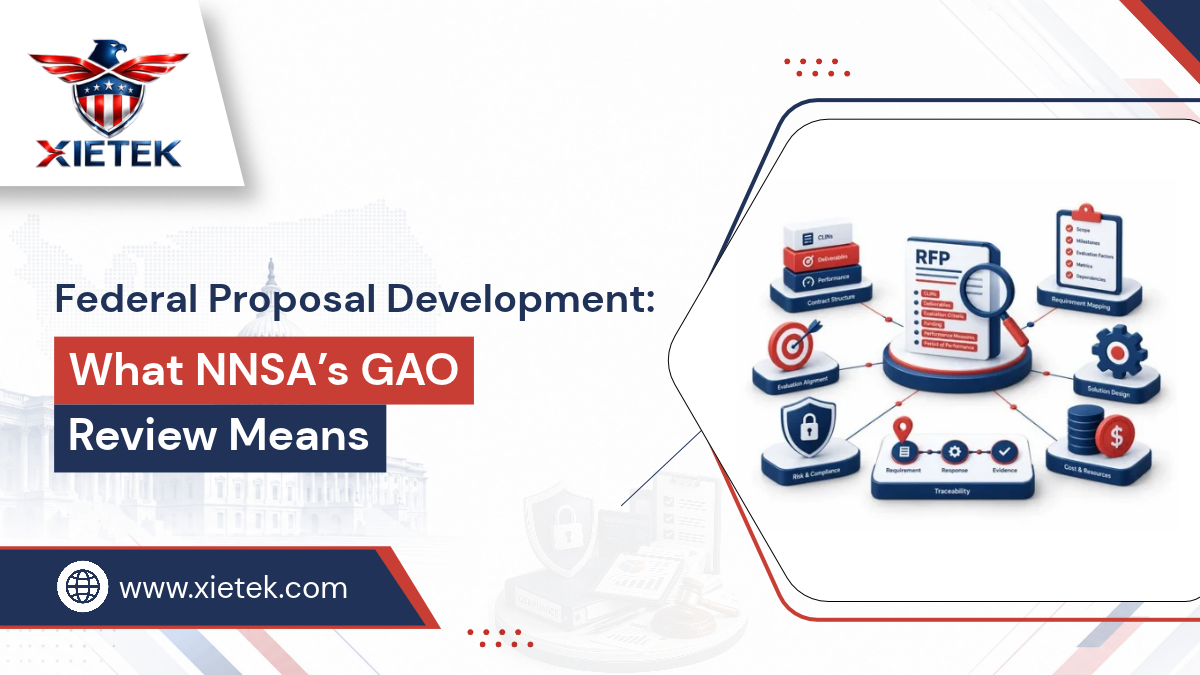
One of the most effective ways to turn contract structure into proposal strategy is to create a requirement-to-response map before assigning technical writing tasks.
A practical map can connect:
| RFP element | What to identify | Proposal response |
|---|---|---|
| CLIN or sub-CLIN | Scope, pricing and period | Technical and management approach |
| Deliverable | Output and acceptance criteria | Delivery method and quality controls |
| Milestone | Timing and performance expectation | Schedule and staffing approach |
| Evaluation factor | What the government will assess | Evidence and discriminators |
| Performance measure | Desired outcome | Metrics and reporting |
| Dependency | Relationship with other work | Integration and risk controls |
This creates a traceable path from requirement → response → evidence.
It also gives proposal reviewers a practical test. Instead of asking whether the proposal simply sounds complete, they can determine whether each important government requirement has a corresponding response, owner and supporting evidence.
Connect Requirements to Evaluation
GAO found that separate line items can give NNSA greater visibility into project-specific costs and allow the agency to tailor contract types, fee structures and performance evaluations for specific work. However, GAO also noted that these approaches require additional administrative resources and that line items alone have not been shown to guarantee better performance or direct cost savings.
For proposal teams, that creates an important question:
What outcome is the government trying to make visible, measurable or accountable through this requirement?
The answer can shape how the proposal presents staffing, quality controls, milestones, reporting, risk management, technology and performance metrics. If a solicitation emphasizes schedule performance, for example, the technical approach should explain how the contractor will control schedule risk. If a deliverable has defined acceptance criteria, the proposal should show how quality will be managed against those criteria.
Make the Proposal Easy to Trace
Federal evaluators should not have to reconstruct the relationship between an RFP requirement and the contractor’s proposed solution. A strong response makes that relationship visible through its organization, requirement references, deliverable descriptions, metrics, staffing responsibilities and supporting evidence.
This becomes particularly important when an RFP contains multiple CLINs, task areas or separately identifiable deliverables. The proposal should show how those pieces fit into one coherent delivery model while still addressing the government’s individual requirements. The objective is alignment, not duplication. A proposal should reflect the government’s structure where doing so improves clarity without simply copying the RFP into the response.
Don’t Assume More Line Items Are Always Better
GAO’s review does not conclude that separating work into more contract line items automatically improves performance.
According to GAO, separate line items can improve visibility and support different management or evaluation approaches but they can also increase administrative requirements. NNSA officials and contractor representatives noted that separate fee plans and performance evaluations require additional resources to implement.
That distinction matters for proposal teams. The lesson is not to advocate for more segmentation. It is to understand the structure presented in the solicitation and determine what it means for the proposed technical, management, staffing, pricing and performance approach.
Federal Proposal Development Checklist
Before finalizing a proposal, ask:
What work is separately identifiable? Identify major CLINs, sub-CLINs, deliverables, services and outcomes.
What does each requirement require? Connect scope to deliverables, acceptance criteria, milestones and performance expectations.
How will the government evaluate it? Map requirements to evaluation factors, subfactors, metrics, incentives and reporting requirements.
Where are the dependencies? Identify relationships between staffing, technology, subcontractors, deliverables and schedules.
Is the response traceable? Make sure evaluators can move easily from the solicitation requirement to the proposed solution and supporting evidence.
Does the structure support the story? Organize the technical and management approach so the proposal reflects the government’s priorities without simply repeating the RFP.
What This Means for Proposal Teams
GAO’s NNSA review is specific to NNSA’s M&O contracting practices but it offers a useful lesson for federal contractors: requirements should be analyzed as a connected contract structure, not as isolated sentences in an RFP.
A solicitation is more than a list of technical requirements. Its structure can provide clues about how the government expects work to be delivered, measured, funded and overseen.
That is why federal proposal development should begin with requirement analysis rather than narrative drafting. Map the contract structure, identify performance priorities, connect deliverables to evaluation criteria and make the proposed solution easy to trace. When proposal teams understand both what the government requires and how those requirements are organized, they can build responses that are clearer, more consistent and easier to evaluate.
Frequently Asked Questions
GAO found that NNSA had not documented clear criteria for determining when separately identifiable work should receive individual contract line items and recommended that NNSA formalize its approach.
CLINs can provide insight into how the government has separated work for pricing, delivery, funding, oversight or performance management. They should be analyzed alongside the rest of the solicitation structure.
No. Proposal teams should determine how each CLIN relates to the broader technical and management approach and provide enough structure for evaluators to trace the response to the requirement.
Requirement mapping connects government requirements to the contractor’s proposed response, supporting evidence, deliverables, responsibilities and evaluation criteria.
Teams should use it as an analytical input. Reviewing CLINs, deliverables, evaluation criteria, funding, milestones and performance measures together can help clarify the government’s priorities.
No. GAO identified potential transparency and oversight benefits but its review did not establish that separate line items by themselves guarantee better performance or lower costs.
Build Proposals Around Requirement and Evaluation Alignment
XieTek LLC provides Proposal Development Services designed to help government contractors translate solicitation requirements into structured, evaluation-aligned proposal responses. From requirement mapping and technical approach development to deliverable alignment and proposal coordination, our team helps connect the government’s contract structure with a clear, defensible response.
Ready to strengthen requirement traceability before gaps affect proposal evaluation? Contact XieTek LLC today to explore proposal development support aligned with your solicitation requirements.