Your next cleared hire could clear every recruiting hurdle and still miss the planned start date because one security processing handoff was not ready.
That risk matters now. The Defense Counterintelligence and Security Agency (DCSA) is moving Industry Initiate and Review (I/R) functions into the Defense Information System for Security (DISS), changing an administrative process that can directly affect cleared hiring timelines.
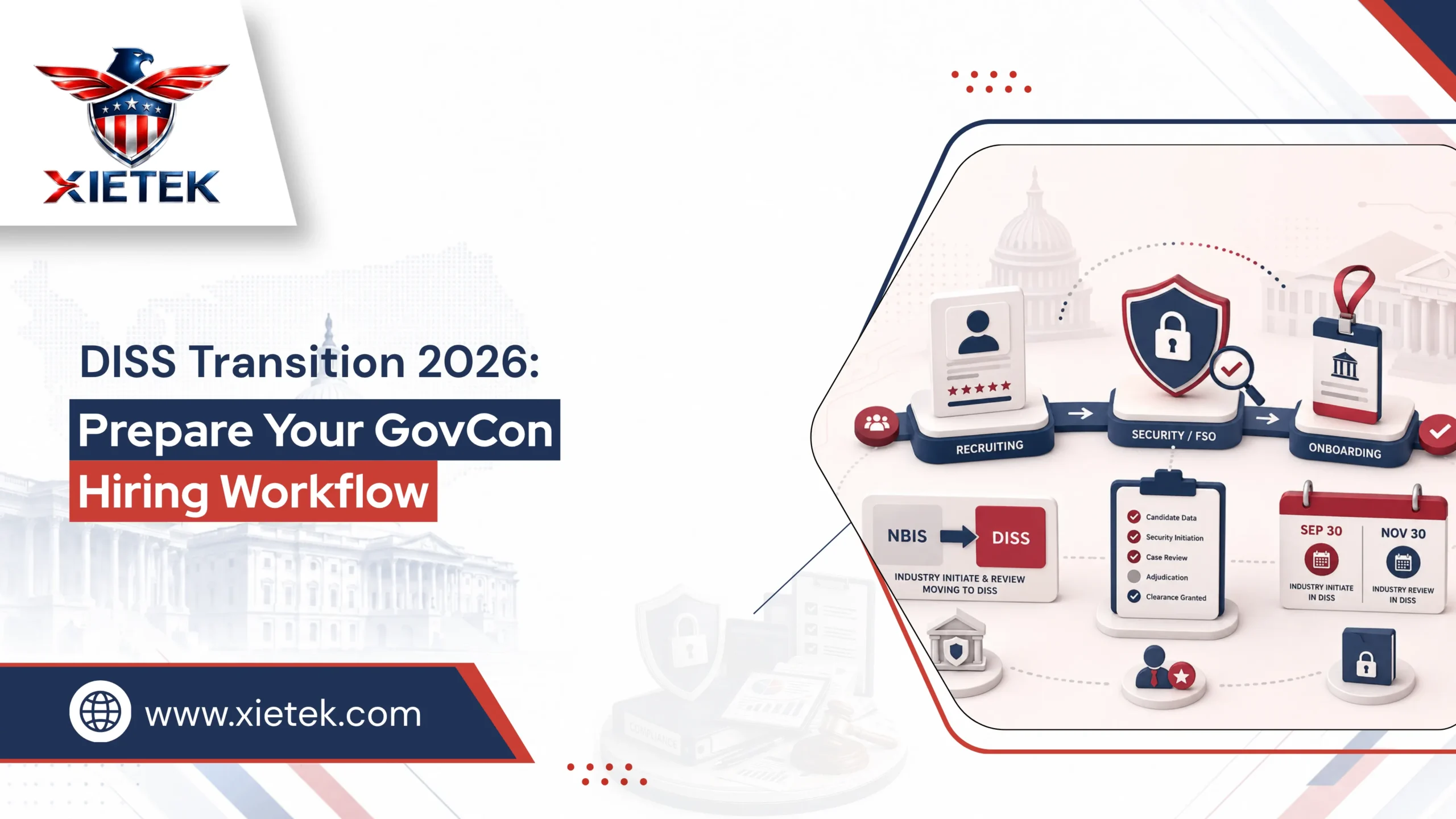
DISS Industry I/R functionality became available July 31, 2026. DCSA identifies two deadlines ahead: September 30 is the last day industry can initiate cases in NBIS Agency and November 30 is the planned shutdown date for NBIS Agency. For government contractors, the remaining transition period is an opportunity to align recruiters, Facility Security Officers (FSOs), onboarding teams and hiring managers before workflow gaps become candidate delays.
In this blog, we examine what the DISS Transition 2026 means for GovCon hiring and the practical steps contractors can take to keep security processing, candidate communication and workforce plans aligned.
The DISS Transition Is Already Underway
DCSA’s August 4 Industry Transition to DISS for Initiate and Review announcement confirms that Industry I/R functionality became available in DISS on July 31. DCSA also released two STEPP (Security Training, Education, and Professionalization Portal) training videos covering the new Initiate and Review functions. September 30 is the next major milestone, when industry will no longer initiate cases in NBIS Agency. DCSA then plans to turn NBIS Agency off November 30.
Contractors should treat this period as an active transition window rather than wait for the final deadline. Teams can use it to confirm DISS readiness, identify cases requiring attention and determine which hiring timelines depend on securityprocessing activity. The objective is to enter the final phase with fewer unresolved access, ownership or case management issues.
Why a Security System Change Matters to Recruiting
Recruiters may not work directly in DISS, but they often own the candidate relationship and communicate expected start dates. Meanwhile, an FSO may manage security activity, onboarding may track documentation and a program manager may plan staffing. When those functions operate from different information, a pending security step can remain invisible until it affects the hire.
Recruiters do not need access to every security detail. They need to know when a candidate enters the security workflow, who owns the next action and whether a dependency could affect onboarding. That visibility helps hiring teams avoid committing to timelines that the underlying process cannot yet support.
Confirm DISS Access and Training Before September 30
DCSA’s official DISS Resources provide account request materials, including the Personnel Security System Access Request (PSSAR), account procedures and training resources. Contractors should use these materials to verify that the appropriate personnel have the access needed to perform their responsibilities rather than discovering an account issue when a candidate is already waiting.
DCSA’s DISS FAQs state that minimum system access requirements include a completed PSSAR plus PII and cyber awareness training certificates. Account Managers determine the specific user base and assign roles based on organizational responsibilities. DCSA has also released STEPP training for the new Industry Initiate and Review functions. Teams responsible for I/R activities should become familiar with the new workflow before an urgent candidate case exposes an access, role or training problem.
Review Pending Cases Against Hiring Priorities
September 30 should function as an operational checkpoint. Security teams should identify relevant cases associated with NBIS Agency activity and determine what needs attention before new initiations there end. Recruiting teams can then connect those cases to active candidates, projected start dates and program staffing priorities.
For each affected hire, teams should know the current status, next required action, responsible owner, relevant deadline and potential onboarding impact. Priority positions deserve attention first, particularly when a contract start, surge requirement or customer commitment depends on staffing. This creates a hiring risk view of the transition instead of leaving case activity isolated inside the security function.
Make Recruiting, FSO and Onboarding Handoffs Clear
Administrative delays often happen between functions rather than within them. Recruiting may believe candidate information has reached security. Security may still be waiting for documentation. Onboarding may treat a target start date as confirmed. Each team can complete its own tasks while the overall hiring process still stalls.
Contractors should define who transfers candidates into the security workflow, who manages the applicable processing activity, who tracks status and who alerts recruiting when a dependency changes. An escalation owner should also be identified for access problems, stalled actions or transition questions. During surge hiring, explicit ownership becomes even more important because one coordination gap can affect several candidates.
Keep Candidates Informed Without Overpromising
Cleared professionals may be managing notice periods, relocation, competing offers and other commitments around an expected start date. When that date depends on security processing, silence or unexplained changes can weaken candidate confidence. Recruiters should therefore distinguish between a target start date and a confirmed start date when dependencies remain unresolved.
Candidates do not need technical explanations of DISS. They need practical information: Has the required information been received? Is anything still needed from them? Has the expected timeline changed? When will they hear from the recruiter again? A consistent communication cadence can preserve candidate engagement without promising a security processing outcome that recruiting cannot control.
Build a DISS Transition Check Into the Hiring Workflow
The strongest response is to connect DISS readiness with the recruiting pipeline rather than manage the transition only as a security project. A focused checklist should cover access and training, pending cases, ownership, hiring dependencies, escalation responsibilities, candidate communication and November shutdown readiness.
For every affected candidate, teams should be able to see enough operational information to understand whether security processing could influence onboarding. The checklist does not need to expose sensitive security information broadly. Its purpose is to give the appropriate recruiting, FSO and onboarding stakeholders enough visibility to coordinate decisions and respond quickly when a dependency changes.
Use the Transition to Strengthen Hiring Operations
According to DCSA’s DISS guidance and resources, DISS supports personnel security activities for the defense community. For GovCon employers, however, the operational effect extends beyond the system itself. Security processing can influence when a candidate enters a role and how confidently a program can plan staffing.
The September 30 and November 30 milestones therefore provide a useful reason to review the wider hiring operating model. Contractors should ask whether recruiters receive timely status signals, FSOs receive complete candidate information, onboarding understands outstanding dependencies and program leaders see potential staffing risks early enough to respond. Recruiting should not manage security processing, but security processing should not become a recruiting blind spot.
Prepare Your Hiring Workflow for the DISS Transition
The DISS Transition 2026 is ultimately a coordination challenge. A system access problem can delay an action. A delayed action can affect onboarding. A changed start date can then influence candidate retention, staffing forecasts and potentially program delivery.
Contractors still have time to reduce preventable disruption. Confirm the right DISS users and roles, review pending cases, clarify handoffs, assign escalation responsibility and keep candidates informed about genuine dependencies. When recruiting, security and onboarding operate from a shared understanding of responsibilities and status, the transition is less likely to become an avoidable hiring bottleneck.
Frequently Asked Questions
Industry Initiate and Review functionality became available in DISS July 31. September 30 is the last day to initiate cases in NBIS Agency and DCSA plans to shut NBIS Agency down November 30.
Confirm required DISS access and roles, review relevant pending cases and identify actions that could affect priority hires or projected start dates.
Not necessarily. DISS access should reflect organizational responsibilities, while recruiters mainly need appropriate visibility into dependencies that could affect hiring timelines.
DCSA identifies a completed PSSAR and PII and cyber awareness training certificates among minimum access requirements. Account Managers determine users and assign roles based on organizational responsibilities.
Track each affected candidate’s current status, next action, responsible owner, relevant deadline and potential start date impact. This keeps security processing dependencies connected to hiring priorities.
Separate target dates from confirmed dates when security processing remains a dependency. Give candidates consistent updates without promising outcomes or timelines outside recruiting’s control.
RPO teams connect recruiting activity, candidate communication and onboarding coordination. Appropriate visibility into security processing dependencies can help reduce missed handoffs and prevent administrative issues from becoming hiring delays.
Keep Security Processing and Hiring Moving Together
XieTek LLC provides Recruitment Process Outsourcing (RPO) support designed to help government contractors build coordinated and scalable hiring workflows. Effective RPO connects candidate sourcing and engagement with clear handoffs, consistent communication and workforce visibility that can help keep hiring plans on track.
Preparing your cleared hiring workflow for the DISS transition? Contact XieTek LLC to explore RPO support that can help keep recruiting, onboarding and workforce planning aligned with changing operational requirements.