Hiring becomes harder when a company starts growing quickly. Open positions can spread across several departments. Recruiters may manage too many roles at once, while hiring managers struggle to find qualified candidates. As hiring volume increases, recruitment can become a bottleneck instead of supporting business growth.
This is where Recruitment Process Outsourcing can help. Instead of handling every job opening separately, RPO gives organizations access to a recruitment partner that can manage part or all of the hiring process. Support can include candidate sourcing, screening, interview coordination, recruitment management and talent pipeline development. As a result, organizations can create a more consistent and scalable hiring process.
For companies competing for specialized talent, managing rapid growth, or supporting government and federal contracting requirements, this flexibility can be especially useful. So, what does RPO involve and when should an organization consider outsourcing recruitment? Let’s break it down.
What Is Recruitment Process Outsourcing?
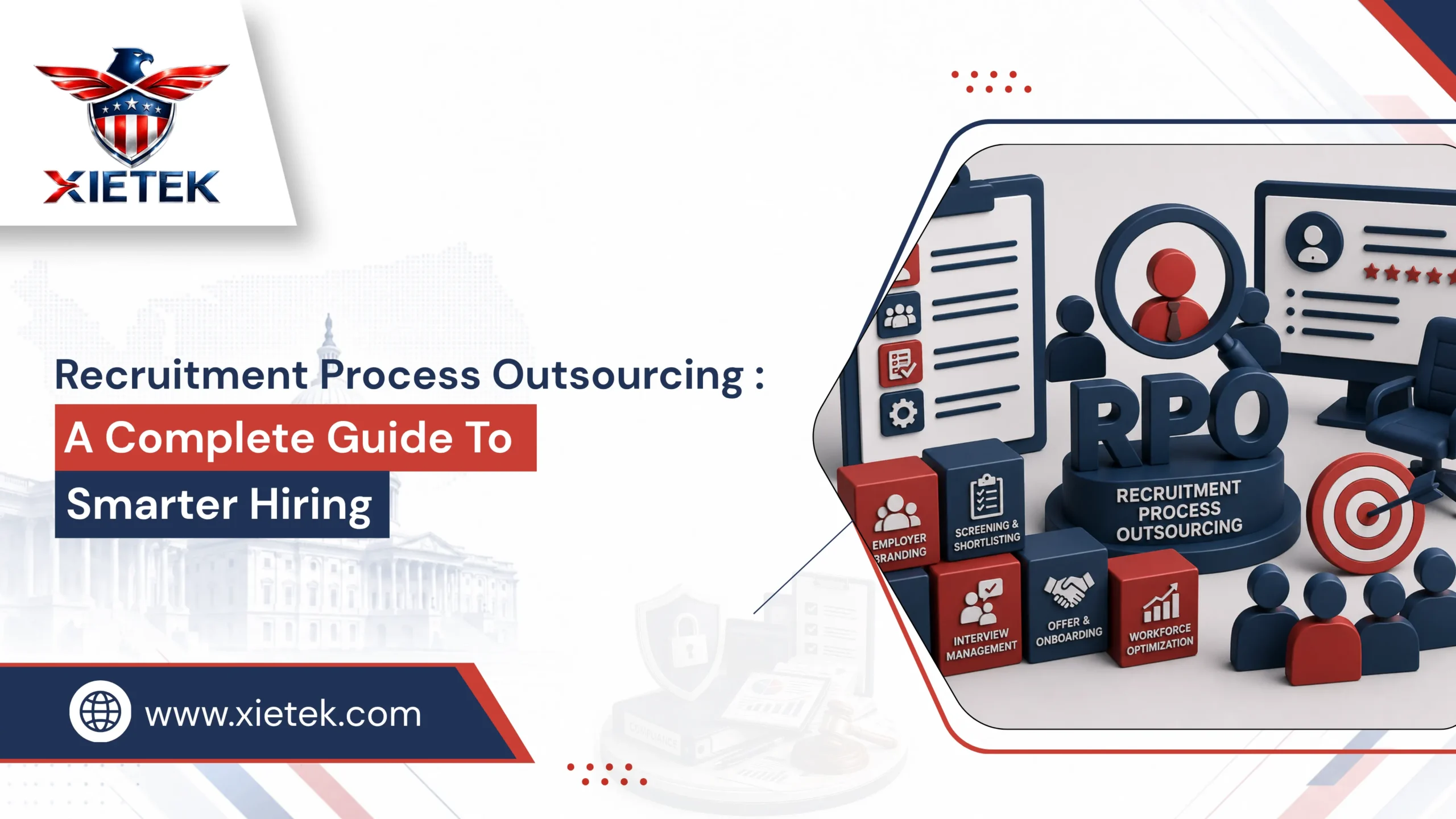
Recruitment Process Outsourcingis a hiring model in which an organization transfers some or all of its recruitment activities to an external provider. Traditional staffing usually focuses on filling specific positions. RPO takes a broader approach by supporting the recruitment process itself. An RPO provider can work as an extension of the internal team and support workforce planning, recruitment strategy, candidate sourcing, job postings, screening, interview coordination, talent pipelines, recruitment technology, reporting, offer management and onboarding support. The exact scope depends on the organization’s needs. Some companies outsource only one part of recruitment, such as candidate sourcing. Others use Recruitment Process Outsourcing Services to manage the full hiring process from planning through onboarding.
How Does Recruitment Process Outsourcing Work?
RPO recruitment usually begins with a clear understanding of the organization’s hiring goals. The RPO provider works with the company to understand workforce needs, hiring volume, job requirements, timelines and current recruitment challenges. From there, the provider can build a recruitment plan around those needs. The process may include workforce planning, recruitment strategy, candidate sourcing, screening, interview coordination, selection support and performance reporting.
Workforce planning, helps identify current and future hiring needs. The recruitment strategy then defines how the organization will find the right people based on job requirements, locations, business goals and talent availability. After that, recruiters source and screen candidates, coordinate interviews and help move qualified applicants through the hiring process. Finally, the team reviews recruitment results and looks for ways to improve. This creates a repeatable process instead of relying on disconnected hiring activities.
Why Are Businesses Turning to RPO?
Recruitment challenges have changed as companies compete for specialized skills and try to control hiring costs. Internal recruiting teams may have strong experience, but hiring demands can quickly become difficult to manage when the number of open roles increases.
High Hiring Volume
Companies experiencing rapid growth may need to hire dozens or even hundreds of employees within a short period. An RPO provider can add recruitment capacity without requiring the company to immediately build a larger permanent recruiting team.
Limited Recruiting Resources
Internal HR teams often manage many responsibilities beyond recruitment. By outsourcing selected recruitment tasks, these teams can spend more time on employee engagement, retention, workforce planning and other strategic priorities.
Difficult-to-Fill Positions
Technical, healthcare, cybersecurity, engineering and other professional roles often require targeted sourcing. An experienced recruitment partner can expand the talent pipeline and reach qualified candidates who may not be actively looking for a new job.
Inconsistent Hiring Processes
Different hiring managers may follow different recruitment practices. RPO can introduce more consistent workflows for sourcing, screening, communication, interview scheduling and reporting. As a result, hiring teams gain better visibility into the recruitment process.
Slow Time-to-Hire
Long hiring cycles can cause companies to lose qualified candidates to competitors. A structured recruitment process can reduce unnecessary delays and help keep candidates moving through the hiring pipeline.
5 Major Benefits of Recruitment Process Outsourcing
RPO is not simply about handing recruitment tasks to another company. When organizations use it effectively, RPO can support broader workforce and business goals.
Scalable Hiring
Recruitment needs can change quickly. A company may need only a few hires one month and a much larger recruitment effort the next. RPO provides additional recruitment capacity that can grow or shrink with demand.
Access to Recruitment Expertise
A dedicated recruitment partner can bring experience in candidate sourcing, screening, recruitment operations, talent pipelines and hiring strategy. This can be especially helpful for organizations that do not have specialized recruitment expertise in-house.
Better Candidate Pipelines
Successful hiring often depends on having qualified candidates available before positions become urgent. RPO providers can continuously build and maintain talent pipelines instead of starting a new search every time a position opens.
More Consistent Recruitment Operations
Standardized processes can improve candidate tracking, communication, screening, interview coordination and reporting. In turn, hiring managers gain a clearer view of what is happening across the recruitment process.
More Focus for Internal Teams
Internal HR and management teams can spend more time on strategic workforce priorities when they outsource selected recruitment activities. This can reduce administrative work while giving internal teams more room to focus on the broader employee experience.
RPO vs. Traditional Staffing: What’s the Difference?
RPO and traditional staffing can both help organizations find talent, but they work in different ways. Traditional staffing usually focuses on providing candidates or workers for specific positions. For example, a company might ask a staffing provider to fill five software engineering roles.
RPO focuses on the wider recruitment process. In that same situation, an RPO provider may manage technology hiring across the organization. That support could include candidate sourcing, screening, talent pipeline development, recruitment coordination, reporting and other hiring activities.
The right model depends on the organization’s needs. Staffing can be useful for specific workforce requirements, while RPO can be a better fit when a company wants to improve and scale its overall recruitment process.
RPO for Government Contractors
Government contractors often face hiring challenges that differ from those of commercial organizations. A contractor may need to recruit qualified professionals quickly after winning a contract. It may also need to maintain staffing levels throughout contract performance or build teams with specific technical and professional skills.
Some positions may require Security Clearances or experience working in federal environments. For this reason, RPO for government contractors can provide valuable recruitment support when companies need to build teams quickly and consistently.
Government contractor hiring can cover information technology, cybersecurity, software development, engineering, program management, healthcare, administrative support, data and analytics and technical operations.
For contractors, recruitment is not simply about filling an open position. Hiring the right people can directly affect contract performance, delivery timelines and the ability to meet customer requirements. An RPO partner can help create a more structured talent acquisition process that supports both current contracts and future opportunities.
What Is Government RPO?
Government RPO refers to recruitment process outsourcing designed to support government-related hiring and workforce needs. The model can benefit government contractors, subcontractors, professional services organizations and other companies that support public-sector programs. Depending on the organization’s needs, Government RPO may include candidate sourcing, government contractor staffing, technical recruitment, cleared recruitment, workforce planning, talent pipeline development, recruitment operations and contract-specific hiring support.
Most importantly, the recruitment strategy should match the organization’s contract requirements and workforce goals. A structured approach can help contractors respond more effectively when hiring needs change.
The Role of Cleared Recruitment
Some government and defense-related positions require candidates to hold specific security clearances or meet other eligibility requirements. This makes Cleared Recruitment different from standard hiring. Organizations may need to find candidates with the right experience while also considering clearance status, eligibility, technical skills and project requirements. As a result, recruiters need to understand both the role and the requirements connected to the position.
A strong cleared recruitment strategy can help contractors find relevant talent and reduce delays linked to specialized hiring. For contractors supporting federal programs, building relationships with qualified cleared professionals can also create a stronger long-term talent pipeline.
When Should You Consider Recruitment Process Outsourcing?
RPO can be a good fit when hiring needs start putting pressure on internal teams. Common signs include rising hiring volume, overloaded recruiters, long time-to-hire, difficult-to-fill roles, inconsistent hiring processes and growing recruitment costs. It can also help when a company enters a new market or location, wins a major contract that requires rapid workforce expansion, or needs better talent pipeline management. In these situations, an external recruitment partner can provide additional capacity without requiring the organization to build a larger internal team immediately.
RPO does not mean outsourcing everything. Organizations can choose the level of support that fits their needs. For example, one company may outsource candidate sourcing while keeping interviews and final hiring decisions in-house. Another may use a full-cycle RPO model that covers the recruitment process from workforce planning through onboarding.
How to Choose an RPO Provider
Choosing the right RPO provider involves more than comparing prices. Organizations should consider whether a provider understands their industry, hiring requirements, workforce goals and candidate market.
Industry Experience
Look for a provider that understands the roles and skills your organization needs to hire.
Recruitment Capability
The provider should have the ability to manage sourcing, screening, recruitment operations and candidate pipelines at the required scale.
Technology
Effective recruitment technology can help teams manage candidates, track progress and understand hiring performance.
Scalability
Hiring requirements can change quickly. Therefore, an RPO provider should be able to expand or adjust recruitment support when your needs change.
Communication
Clear communication helps hiring managers understand recruitment progress and address problems quickly.
Performance Measurement
A strong RPO provider should track useful metrics such as time-to-fill, candidate quality, sourcing results and hiring conversion.
Cultural Fit
The recruitment partner will communicate with potential employees on your organization’s behalf. For that reason, it should represent your company and employer brand professionally.The right RPO relationship should feel like an extension of your organization rather than a disconnected external service.
Recruitment Metrics That Matter
One major benefit of RPO is better visibility into recruitment performance. Organizations can track time-to-fill, time-to-hire, cost-per-hire, candidate conversion rates, interview-to-offer ratios, offer acceptance rates, source effectiveness, quality of hire, candidate pipeline size and hiring manager satisfaction. These metrics help companies understand what works and where the recruitment process needs improvement. However, metrics should connect to real business results.
Reducing time-to-hire is useful, but not if it leads to poor-quality hires. Similarly, receiving more applications does not automatically mean the talent pipeline has improved. The real goal is to create an efficient recruitment process that consistently produces qualified hires.
How RPO Supports Smarter Hiring
The biggest benefit of recruitment process outsourcing is not simply having someone else handle recruitment. Instead, it gives organizations a more structured way to manage talent acquisition.
A strong RPO model connects recruitment strategy with workforce goals. It builds stronger candidate pipelines, creates consistent hiring processes, improves recruitment visibility through technology and brings specialized recruitment knowledge to the team. At the same time, the organization can adjust recruitment capacity as its needs change and use hiring data to improve results. This approach makes recruitment more predictable and gives organizations greater control over one of their most important business functions.
Recruitment Process Outsourcing is a model in which an organization transfers part or all of its recruitment activities to an external provider. The provider can support candidate sourcing, screening, recruitment operations, talent pipeline development and full-cycle recruitment.
The terms are often used interchangeably, but RPO usually refers to a more structured and ongoing partnership. An RPO provider can manage part or all of an organization’s recruitment process. Traditional recruitment outsourcing may focus on specific hiring tasks or positions.
Yes. RPO can scale according to an organization’s hiring needs. A smaller company can outsource selected recruitment activities instead of maintaining a large internal recruiting team.
Yes. RPO for government contractors can support workforce expansion, technical hiring, cleared recruitment and contract-specific staffing needs. It can be especially useful when contractors need qualified professionals quickly after winning or expanding a contract.
Staffing generally focuses on providing candidates or workers for specific positions or workforce needs. RPO focuses on managing recruitment processes and can cover activities across the full hiring lifecycle.
Cleared recruitment involves finding and hiring professionals who have the required security clearance or eligibility for positions that involve access to protected government information or systems.
RPO can help control recruitment costs by creating consistent processes, improving sourcing efficiency, reducing unnecessary recruitment work and allowing organizations to adjust recruitment capacity based on demand.
Implementation time depends on the scope of services, hiring volume, number of roles, technology needs and company size. A focused RPO engagement can generally start faster than a full recruitment transformation.
Build a Smarter Hiring Strategy With XieTek LLC
XieTek LLC provides Recruitment Process Outsourcing Services to help organizations build stronger talent pipelines, streamline recruitment operations and scale hiring more efficiently.
From candidate sourcing and screening to full-cycle recruitment and workforce support, our team works as an extension of your organization to help you find and hire qualified professionals.
Ready to build a smarter hiring process? Contact XieTek LLC today to discuss your recruitment needs and discover how RPO can support your organization’s growth. Explore XieTek LLC’s Recruitment Process Outsourcing Services and take the next step toward a stronger, more scalable talent acquisition strategy.